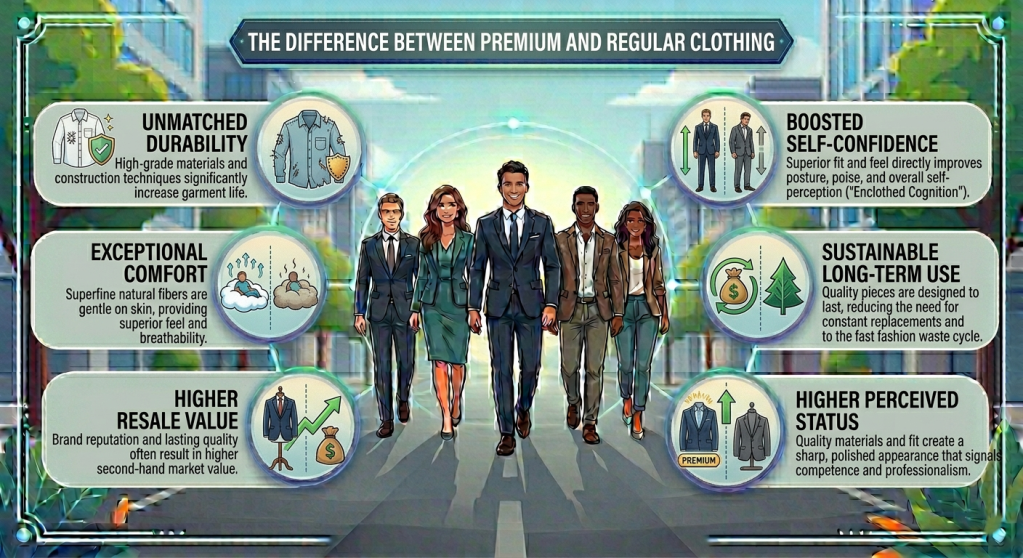
Hold a premium dress shirt next to a regular one from a fast-fashion rack, and at first glance, they might look nearly identical. Same color, similar cut, comparable style. It’s only when you actually handle both that the real differences start showing up.
Understanding what separates premium clothing from regular clothing helps you spend smarter, whether that means paying full price for something that’s genuinely worth it or recognizing when a regular piece, maybe found through a solid yard of deal, is the more sensible choice for a given purpose.
Let’s go through the actual, concrete differences point by point.
Fabric: Where the Difference Often Starts
Fabric is usually the first place premium and regular clothing diverge, even if it’s not always obvious without close inspection.
Fiber Content and Weave Density
Premium clothing tends to use higher percentages of natural fibers, or higher-grade synthetic blends engineered specifically for durability and feel. The weave is typically tighter and more consistent, which affects both how the fabric drapes and how long it lasts.
Regular clothing often uses thinner blends with looser weaves, prioritizing low production cost over longevity or feel. This isn’t always visible immediately but becomes obvious after a few washes.
How Fabric Ages Differently
Premium fabric tends to soften and improve with wear and washing, while maintaining its structural integrity. Regular fabric often starts breaking down structurally within months, developing pilling, thinning, or loss of shape.
This aging difference is one of the clearest practical distinctions between the two categories.
Construction: The Hidden Layer of Quality
Fabric gets most of the attention, but construction quality is arguably just as important in separating premium from regular clothing.
Stitching and Seams
Premium garments typically feature tighter, more consistent stitching, particularly at stress points like underarms, pockets, and button attachments. Regular clothing often uses looser, faster stitching methods designed to minimize production time and cost.
This difference directly affects how long a garment survives regular wear before seams start to fail.
Hardware Quality
Buttons, zippers, and clasps differ noticeably between categories. Premium clothing tends to use more durable hardware that resists breaking or jamming. Regular clothing frequently uses cheaper hardware that works fine initially but fails earlier with regular use.
Lining and Interfacing
In structured garments like jackets and blazers, premium clothing usually includes proper lining and interfacing that help the garment hold its shape. Regular clothing often skips or minimizes these elements to reduce cost, resulting in garments that lose structure faster.
Fit and Pattern-Making
This is one of the most underrated differences between premium and regular clothing.
Pattern Precision
Premium brands generally invest more in pattern-making, resulting in clothing that fits more naturally across different body shapes. Regular clothing often relies on simplified, mass-produced patterns that fit a narrower range of body types well.
Sizing Consistency
Premium clothing tends to maintain more consistent sizing across different items within the same brand. Regular clothing, particularly from fast-fashion retailers, often varies significantly in fit from one item to the next, even within the same labeled size.
Design Longevity Versus Trend-Driven Production
Premium and regular clothing often differ significantly in their relationship to trends and timelessness.
Classic Versus Trend-Focused Design
Premium clothing, particularly from established brands, frequently favors classic, timeless design choices meant to remain relevant for years. Regular clothing, especially fast fashion, is often designed around current trends with a shorter intended lifespan in mind.
Production Speed and Cycle
Regular clothing is typically produced on rapid cycles to keep up with changing trends, prioritizing speed to market over long-term durability. Premium clothing usually follows slower, more deliberate production cycles, which supports both better construction and more enduring design.
Price Versus Value: Separating the Two
This is where comparisons often go wrong. Price and value aren’t always directly correlated, and understanding the difference matters for smart shopping.
When Premium Pricing Reflects Real Value
Premium pricing genuinely reflects better materials, construction, and design longevity in many cases. This translates into a lower cost-per-wear over time, even with a higher upfront price.
When Premium Pricing Doesn’t Reflect Better Quality
Some brands charge premium prices primarily for branding and logo recognition without meaningfully better materials or construction. In these cases, the “premium” label doesn’t necessarily mean better value.
When Regular Clothing Makes More Sense
For items worn infrequently, used in messy or high-risk environments, or needed only temporarily, regular clothing’s lower upfront cost often makes more practical sense than premium investment. Not every garment needs to be a long-term investment.
A Side-by-Side Summary
| Category | Premium Clothing | Regular Clothing |
|---|---|---|
| Fabric | Tighter weave, higher-grade fibers | Thinner blends, looser weave |
| Stitching | Reinforced at stress points | Faster, less reinforced |
| Hardware | Durable buttons and zippers | Lower-cost hardware |
| Lining/Structure | Proper interfacing in structured pieces | Often minimal or absent |
| Fit | More precise pattern-making | Less consistent across items |
| Design Lifespan | Classic, longer-lasting design | Trend-driven, shorter relevance |
| Cost-Per-Wear | Often lower over time | Often higher over time |
| Best Use Case | Frequently worn staples | Occasional or short-term needs |
How to Tell the Difference When Shopping
Knowing the theoretical differences is one thing. Spotting them in person, especially while shopping, is another skill entirely.
- Check the seams up close. Even, tight stitching signals better construction regardless of brand name.
- Feel the fabric weight. Substantial, dense fabric usually indicates higher quality than thin, see-through material.
- Test the hardware. Buttons and zippers should feel secure and move smoothly, not loose or stiff.
- Look inside the garment. Quality lining and finishing inside jackets or structured pieces often reveal more than the outer appearance.
- Don’t assume price equals quality automatically. Inspect the actual garment, since some “premium” pricing reflects branding more than construction.
Smart Shopping Across Both Categories
Understanding these differences doesn’t mean abandoning regular clothing entirely or only buying premium at full price. Many savvy shoppers mix both categories strategically, investing more in frequently worn staples while choosing regular clothing for occasional-use items.
It also means staying alert for a genuine yard of deal on premium pieces, since discounted premium clothing often delivers the best overall value: the durability and construction of premium goods at a price closer to regular clothing.
When the Line Between Categories Blurs
It’s worth noting that the line between premium and regular clothing isn’t always sharp. Some mid-range brands offer construction and material quality closer to premium standards at more moderate prices, while some expensive brands underdeliver relative to their price point.
This is why inspecting the actual garment, rather than relying purely on price or brand reputation, remains the most reliable way to judge where a specific item actually falls on the spectrum.
Conclusion
The real difference between premium and regular clothing comes down to fabric quality, construction standards, fit precision, and design longevity, not just price tags or brand names. Premium clothing generally delivers better durability and value over time, particularly for frequently worn items, while regular clothing can still make practical sense for occasional or short-term needs.
Smart shopping means understanding these differences well enough to make informed choices, mixing premium investment pieces with practical regular items, and staying patient enough to catch a real yard of deal when premium quality becomes available at a more accessible price.
Once you know what to look for, the difference between the two categories becomes much easier to spot, and your shopping decisions become considerably smarter as a result.
FAQs
1. Is premium clothing always better than regular clothing? Not universally. Premium clothing generally offers better durability and construction, but regular clothing can be the smarter choice for infrequently worn or short-term items.
2. How can I tell if a high price actually reflects better quality? Inspect the fabric weight, stitching, and hardware directly rather than relying on price or brand name alone. Genuine quality differences are usually visible up close.
3. Can I get premium-quality clothing without paying full premium price? Yes. Watching for a real yard of deal on quality pieces during sales often delivers premium construction and materials at a more accessible price point.
4. Does regular clothing ever match premium quality? Occasionally. Some mid-range brands offer construction closer to premium standards at moderate prices, which is why inspecting the actual garment matters more than relying purely on category assumptions.
5. What’s the most reliable way to spot the difference while shopping? Check seams, fabric weight, and hardware quality directly. These details reveal more about actual quality than price tags or brand reputation alone.


